Daley Byers Logo
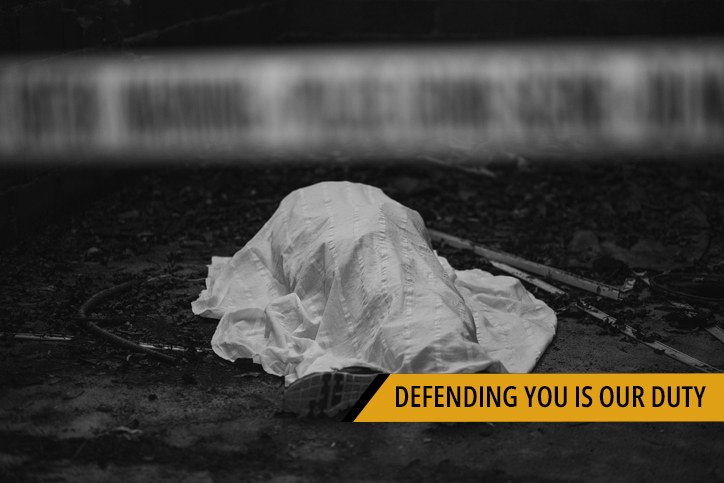
Boy Gets Murdered In Hamilton

Boy Gets Murdered In Hamilton

14 year old murdered over a “bike”  What is happening in this country?

Yesterday a 14-year-old boy was assaulted in Hamilton outside his school and stabbed to death allegedly over a bicycle.  This case draws attention to so many possible legal issues. Problems with youth crime and appropriate punishment. This is an obvious case of bullying.  What was the role of social media? Was social media bullying part of this tragedy as well? The allegations as reported indicate that the young boy was attacked by a number of others while on watchers recorded the incident on the cell phones.  Some people are demanding that those that were recording the incident be charged with aiding and abetting because by the very nature of recording the incident they encouraged and incited the crime. 

Again, we have the issue of the presence of weapons in our community. 

If the accused had not succumbed to his wounds there are a number of charges in the criminal code that would have applied – aggravated assault, assault cause bodily harm, assault with a weapon, weapons dangerous.  

However, the suspects, in this case, will most certainly face first-degree murder charges.  Other possible charges are 2nd-degree murder and manslaughter.  In fact, at the time of writing 2 of the 4 (so far) are charged with first-degree murder. The other two were arrested for first-degree murder but again as of the time of writing have yet to be formally charged. 

The age of those charged will have a significant impact on the process.  There are 4 individuals, 14, two 16-year-old persons and one 18 years old.  Those under 18 are youths and start with a prosecution under the Youth Criminal Justice Act.  The Crown can apply to have them tried as an adult and punished as an adult. 

Adult Sentences

The Youth Criminal Justice Act does allow judges to impose an adult sentence on a youth who is found guilty of a serious offense and was 14 years of age or older when the crime was committed. In fact, prosecutors are obligated to consider seeking an adult sentence when a youth is found guilty of murder, attempted murder, manslaughter or aggravated sexual assault. However, the Act allows provinces to raise the age at which this obligation applies to 15 or 16.

When a judge decides to impose an adult sentence, the Criminal Code penalties for adult offenders are applied to the youth. This can include mandatory minimum penalties and sentences of up to life imprisonment. However, no portion of either an adult or youth sentence can be served in an adult prison while the youth is still under the age of 18.

The 18-year-old is an adult under the law and if convicted could face a life sentence of 25 years without parole.  

This was clearly a senseless crime, committed by young individuals.  However, the context is most disturbing, the bullying – 4 attacking 1, the use of a weapon, the fact that onlookers stood by and used their cell phones to video.  The issues are simple and complex at the same time. What can we do to prevent this type of tragedy in the future? One child is gone, a family is devastated, 4 others are facing a life sentence in jail.  

Disorderly Conduct In Canada

Disorderly Conduct In Canada

Oh My, How Disturbing! Disorderly Conduct In Canada

Indecent Act, Cause Disturbance, Trespassing at night (prowl at night)

The story we’re going to tackle today is that of the Toronto Maples Leafs’ player, Auston Matthews. He was charged with disorderly conduct in Arizona. According to a CBC report, Matthews and his group were approached by a person who believed they were intoxicated.  Apparently they attempted to open a locked car door to the vehicle in which the complainant was sitting. She was security personnel. She confronted the group and Matthews allegedly left the conversation, dropped his pants, and grabbed his butt cheeks. He still had his underwear on.

So how does match up to Canadian offenses? Well, offences about disorderly conduct are contained in Sections 173 -179 of the Criminal Code. The offences are important to look at because they’re quite varied and can carry stiff sentences. They may also be subject to mandatory minimums. The offences and their sentences are:

  1. Indecent Acts (s.173)
    1. If charged as an indictable offense: Maximum imprisonment: 2 years; 
    2. If charged as a summary conviction: Maximum imprisonment up to 6 months.
  2. Nudity (s.174)
    1. This is a special offense. It only applies to people who are nude in a public place (or exposed to public view). Nude means ‘clad so as to offend against public decency or order’. Most importantly of all, a person cannot be prosecuted under this section without the consent of the Attorney General, by virtue of s.174(3).
  3. Causing disturbance, indecent exhibition, loitering, etc. (s.175)
    1. Punishable on summary conviction
  4. Obstructing or violence to or arrest of an officiating clergyman (s.176)
    1. Maximum imprisonment up to 2 years. 
    2. Note, there is also s.176(2), which is disturbing religious worship or certain meetings. A person guilty of an s.176(2) offense is punishable on summary conviction
  5. Trespassing at night (s.177)
    1. Punishable on summary conviction
  6. Vagrancy (s.179)
    1. Punishable on summary conviction

The offense against clergymen contained in s.176 is a strange one. We’ve talked about it before in our article on Assault in Canada. 

As we can see, there’s quite a number of disorderly conduct offenses in the Criminal Code. Not all of them are as severe as each other. The offence of committing and Indecent Act is obviously far more serious than the charge of causing a disturbance. In cases where an Indecent Act involves exposure to children under the age of 14, Sex Registry issues arise; SOIRA and the Ontario Sex Offender Registry Act  (Christopher”s Law) apply.

Had Matthews been in Canada, he may have been charged with committing an indecent act. The Criminal Code section 173.(1) provides that everyone who willfully does an indecent act in a public place in the presence of one or more persons, or in any place with intent to insult or offend any person is guilty of an offense. Alternatively, he could have been charged under s.175, for causing a disturbance. Causing a disturbance includes s.175(1)(b) “openly expos[ing] or exhibit[ing] an indecent exhibition in a public place”. It also includes s.175(1)(a), causing a disturbance by being drunk in a public place. If the allegations against him are true, they might satisfy this section as well.  

We recently defended a client who was allegedly observed masturbating with genitals exposed on a park bench.  When a group of teenagers approached he allegedly pulled up his shorts but continued to touch his genital area.  When the teenagers had passed he allegedly pulled his shorts down again and exposed his genital area. He was charged with committing an Indecent Act.  The ages of the teenagers, although not spelled out, appeared to be over 14 years. The criminal code allows the Crown to decide whether to proceed by indictment or by way of summary conviction. We actually negotiated a resolution to a charge under s. 175 (1) (b) “openly exhibits an indecent exhibition” and our client received a conditional discharge even though the Crown was seeking a conviction discharge on sentence.  The s. 175(1)(b) charge is much less serious than a charge under s. 173 for an Indent Act. The charge under s. 175 only permits the Crown to proceed by way of summary conviction and there is no risk of registration on a Sex Registry. 

To get a better grasp, it may be worth looking at a few locals who have been charged under these sections. For example, a Kingston councilor was charged with causing a disturbance, although charged were later dropped. He allegedly yelled, screamed, and slammed a bus’ front window. The Councillor allegedly stopped his bicycle in front of the bus to restrict its movement, and also placed a child on the pavement in front of the bus. The councilor alleged he protested peacefully because his child was denied service. Of note, the Councillor’s charges were only dropped due to an agreement reached between his defense lawyers and the Crown. This included an accountability program and a letter of apology. This result shows the value of experienced, knowledgeable legal advice, with expertise in the particular charges you’re facing.

Another good example is the case of a 30-year-old man from Cornwall who was recently charged with causing a disturbance, as well as domestic assault, and breach of undertaking. Sometimes, as this case shows, causing a disturbance can researtch papers be used as an offense in addition to something else like domestic assault. We’ve talked before about domestic assault in our article HERE 

Similarly, a 34-year old Edmonton woman was charged with causing a disturbance and uttering threats to cause death or bodily harm in Peterborough. You can find out more about the offense of uttering threats in our piece about assault and threats, which you can find HERE

An Edmonton woman received a suspended sentence for, among other things, causing a disturbance. She was caught shouting racial slurs at another man. We’ve talked a bit about racism in Canada and the laws that apply to it. You can find that article HERE 

As we’ve seen, Canada has a lot of different offenses for disorderly conduct. Some have minimum sentences, and maximums of 10+ years in jail. Others require the attorney general’s consent to prosecute. Causing a disturbance can often be added on to other offenses or stand on its own.

In some cases, withdrawal of charges may be possible. But, it’s key to have knowledgeable and experienced counsel by your side to effectively negotiate a fair resolution with the Crown.

Austin Matthews could have faced possible Criminal Code charges in Canada. However, there is also a charge under the Liquor Licence Act that might also fit the facts [s. 31(4)] – unlawful possession or consumption of alcohol – basically being drunk in public. $65.00 fine. This is not a criminal charge and is a provincial offense like a speeding ticket.

Being aware of this alternative resolution to the criminal charge of cause disturbance is crucial in negotiations with the Crown regarding resolution. 

Domestic Assault | Domestic Criminal Charges

Domestic Assault | Domestic Criminal Charges

We are writing today to layout and hopefully explain in a straight forward and easily understood manner the laws with respect to domestic assault and related domestic charges.

The following list is composed of the most common charges arising out of a domestic relationship.

  1. Domestic Assault (simple assault);
  2. Assault cause bodily harm;
  3. Assault with a weapon;
  4. Aggravated assault;
  5. Forcible confinement;
  6. Mischief; 
  7. Threating bodily harm;
  8. Threatening death;
  9. Sexual assault.

There are other charges that can fall under the domestic violence but they will be discussed in a later article. 

In almost all cases involving domestic issues whether an assault or as minor as mischief to property (as in throwing a cell phone) the person charged is placed on an order (either through a formal bail hearing or an undertaking provided at the police station) containing the following.

  1. No communication or contact with the complainant (sometimes with exceptions such as “through a mutually agreed 3rd party for the purpose of access to children” or pursuant to a Family Court Order.
  2.  Not to attend within a certain radius of the family home, the place of employment, education or any place the complainant is known to be;

We are often asked – how do I get back home and how long will it take.

We have on numerous occasions arranged variations to the bail provisions prior to the case being completed to get our client’s home.  In the normal course, the Crown does not want contact with the complainant due to possible influence on their witness (the complainant).  It does not matter that the complainant wants you to come home. In fact this happens more often than not. In many cases, the complainant would like the charges dropped and for their partner to come home.  However, put simply – this decision is for the Crown attorney – not the complainant. Once a charge is laid, only the Crown has the power to decide whether it should be withdrawn or not. The Crown will listen to the complainant, but will not necessarily follow the complainants wishes


To begin with lets review the charge of domestic assault (simple assault contrary to s. 266 of the Criminal Code.

Simple assault – a non-consensual touching by one person on  another. We have recently been retained by an individual who gave his a wife a kiss in the midst of an argument – charged with domestic assault

Defences: self defence is the most common defence in these cases. Many times we deal with cases where the complainant in fact instigated the altercation andour client simply used reasonable force to defend himself/herself. Provocation is not a defence but in some  circumstances can be a mitigating factor.

Resolution: If our client is not guilty , we either negotiate withdrawal of the charge (sometimes with a peace-bond which does not involve an admission of the facts to support the charge) or we go to  trial. If our client has committed some wrongdoing we still will attempt to negotiate a peace-bond. If the Crown does not agree with a peace-bond resolution, we will then seek instructions fromour client as to whether he/she wishes to go to trial or would like us to try to negotiate an acceptable resolution (sometimes this involves aplea of guilt for a conditional discharge – no conviction is registered). In many cases, our
clients instruct us to go to trial to see what the Crown can prove. Remember an accused is innocent until proven guilty. We do not have toprove innocence. It is not unusual in these cases for the Crown to discover that they do not have a cooperative witness and the charges are ultimately dismissed.

The Charge of Mischief to private property

There are 2 charges of mischief to private property.  The first is mischief under $5000.00 and the 2nd is mischief over $5000.00.  We have defended both charges of mischief over and mischief under but in the context of domestic violence allegations, the most common is mischief under $5000.00.  The typical case is where in frustration our client has thrown something to the floor – for example a cell phone; or has knocked something off a desk like a laptop.  Other common mischief under $5000.00 cases involve damaged doors, windows and cars.

If there are no other aggravating circumstances, these cases often resolve by way of restitution and the taking of an anger management program (PAR).  The PAR program is the program of choice in the Crown attorney’s office and the program that the Crown often requests as a pre-requisite to a withdrawal of the charge.  It does require a Court order for admission.

The remaining charges listed above will be discussed in a follow up article.  Sexual assault (often time historical sexual assault) allegations have become more prevalent when domestic relationships deteriorate.  These cases require an entirely different perspective and approach because of the relationship between husband and spouse. We will delve into more detail next time.

Aiming For Safety By Targeting Guns

Aiming For Safety By Targeting Guns

Canada’s Criminal Code

The Liberal Party has just announced that they will spend 250 million dollars on gun control and crime!

A 17-year-old was killed in a mass shooting on Saturday, August 14th. 5 other people were seriously injured. The shooting took place in Mississauga. Four of the victims were children. The  victims were a 13-year-old, a 16-year-old, two other 17-year-olds and a woman in her 50s. The victims came from different areas of the building and park in which the shootings took place. The police told CTV News’ Bryann Aguilar that it was too early to know whether the shooting was targeted or gang-related. Preliminary information points to multiple suspects armed with semi-automatics. The mass shooting took place on Darcel Avenue, in the area of Morning Star Drive and Goreway Drive.


You can rest assured that there will be a strong push to elevate police enforcement of violent gun crimes.  We are predicting that, although many of the mandatory minimum sentences with respect to gun crimes have been held unconstitutional, the sentences will increase and the ability to get bail on gun charges will be difficult. 

 In this article we will take a look at Criminal Code to see what firearms offences there are. Afterwards, we’ll discuss two potentially relevant categories of offences and the sentences that go with them.

Firearms and weapons offences are in Part 3 of the Criminal Code. Part 3 is broken up into 11 headings. Each heading contains different sorts of offences and rules. Firearms offences are incredibly serious matters. Conviction of a firearms offence can lead to a person losing the right to own a firearm and depending on the circumstances can result in jail sentences.  In fact many firearms offences also carry ‘mandatory minimums many of which as mentioned above have been held to be unconstitutional. Those provisions and the issue of mandatory minimum sentences will be discussed in a later article. If you’re charged with a firearms offence, it’s crucial to have a knowledgable, and experienced lawyer who can explain the effect of the different sections, and guide you through this complex and severe area of law.  Although the law is already very strict as it relates to firearms, with the marked increase in gun violence the seriousness and enforcement of gun crime will become more intense.

Six of the Part 3 headings deal with offences. The remaining headings deal with other rules relating to firearm offences. These include, for example, “Prohibition Orders”, which requires the Court to ban people from owning firearms or other weapons in certain circumstances. The 6 different types of firearms offences in Canada are:

  1. Use Offences
  2. Possession Offences
  3. Trafficking Offences
  4. Assembling
  5. Export and Import Offences
  6. Offences Relating to Lost, Destroyed, or Defaced Weapons

We’ll talk about ‘use offences’ and ‘possession offences’, as well the sentences for each offence. We’ll discuss other offences in later articles, because this is such a large area of law. Crimes involving firearms are treated extremely seriously. They can lead up to life imprisonment.  That’s not to say there is no flexibility in the law. Some offences are punishable by summary conviction. The easiest way to explain the difference to between an offence by way of summary conviction as to opposed to indictment is to compare to the American system where there are misdemeanors and felony offences.  The summary (misdomeanor) offence are subject to lower sentences. Having an experienced, knowledgable lawyer, with expertise in the offence you’re dealing with is key to navigating the system. Having a lawyer will help you get a fair deal – even in an area as stern and as difficult as firearms offences. The law has some flexibility, but fully engaging it can require expert knowledge.

“Use offences” include using a firearm in the commission of an offence. This is on the high end of the serious firearm offences and can demand a long prison sentence.  Use offences also include ‘careless use of a firearm’, which is a charge brought when a person uses, carries, handles, ships, transports, or stores a firearm or certain other things carelessly. Even this, seemingly minor, offence can carry a prison term of up to 2 years for a first offence, or up to 5 years for a second or subsequent offence. The last of the ‘use offences’ is ‘pointing a firearm’. Pointing a firearm can get you a maximum prison term of 5 years whether ammunition is involved or not.

As for ‘possession offences’, there are 11 different offences listed. The offences and their maximum sentences are:

  1. Possession of a weapon for a dangerous purpose, up to 10 years imprisonment
  2. Carrying a weapon while attending a public meeting, punishable on summary conviction
  3. Carrying a concealed weapon, up to 5 years imprisonment
  4. Unauthorized possession of a firearm, up to 5 years
  5. Possession of a firearm knowing its possession is unauthorized, up to 10 years imprisonment for a first offence (and mandatory minimums for second or later offences)
  6. Possession at an unauthorized place, up to 5 years imprisonment
  7. Unauthorized possession in a motor vehicle, up to 10 years imprisonment
  8. Possession of a prohibited or restricted firearm with ammunition, up to 10 years imprisonment, and subject to mandatory minimums
  9. Possession of a weapon obtained by the commission of an offence, punishable with up to 10 years in prison
  10. Breaking and entering to steal a firearm is punishable by up to life imprisonment.

We anticipate that the range of sentences will increase in the future as whatever government that gets elected will respond to the public’s demand for safety and a stop to gun violence.,

11. Robbery to steal a firearm which is also punishable by imprisonment for life

Jeffrey Epstein: A Canadian Perspective

The last couple of months have seen Jefrrey Epstein’s quick arrest; imprisonment and death grip the public’s attention. A global story has been slowly unraveling for the past decade like a frayed sweater where Jeffrey Epstein was the first loose thread. Jeffrey Epstein was inmate 76318-054 at the Metropolitan Correctional Centre[i]. Epstein was arrested for sex trafficking of minors and conspiracy to commit sex trafficking of minors[ii]. Epstein “worked with several employees and associates to ensure that he had a steady supply of minor victims to abuse, and paid several of those victims themselves to recruit other underage girls to engage in similar sex acts for money”. A one-time trader and financier, Epstein allegedly owned the largest townhouse in Manhattan, and a lot of other properties across the globe[iii]. He was known by and befriended many powerful people. This article will look at the history of the Epstein case, up to his death, and will then briefly discuss how Canadian law might have dealt with somebody in Jeffrey Epstein’s situation.

Epstein and Trump pose together for a photo in 2000

Epstein and Prince Andrew walk together in this photo from New York’s Central Park

Epstein’s most recent arrest and imprisonment wasn’t his first brush with the law. That all started in March 2005, when a woman in Florida telephoned the police to report that her 14-year old step-daughter had sex with a middle-aged man who gave her money[i]. By May, 2006, Epstein was charged with multiple counts of unlawful sex acts with a minor[ii].

Epstein’s mugshot from July 27, 2006

Julie K. Brown of the Miami Herald reports that Epstein’s team negotiated hard, pushing for a deal involving no jail time. The US Attorney’s office alleged that Esptein’s victims had been harassed by his lawyers, and eventually the Justice Department opined that Epstein could be federally prosecuted if no deal were reached. This obviously made life more difficult for Epstein. Esptein’s lawyers doubled down in their efforts, resulting in a deal for Epstein. Despite his power and connections, even Epstein could not get away scot free. Although the deal he obtained was very favorable, he too had to compromise. In 2008, Epstein plead guilty to one count of solicitation of prostitution and one count of solicitation of prostitution with a minor under the age of 18. He was sentenced to 18 months of jail, and 1 year of house arrest/community control. He was also required to register as a sex offender. The deal was criticized by many people as letting Epstein off easy[i]. Regarding the deal, and the then U.S. Attorney’s involvement in it, President Trump himself said that “we’ll look at it very carefully”[ii]. A prosecutor’s job can be difficult, and securing a conviction in the face of a strong and knowledgeable legal team can dissuade prosecutions. It seems like that’s what happened with Epstein, Alexander Acosta, the US Attorney who oversaw the deal, defended his actions by noting that the deal ensured Epstein faced some jail time, and that he had to register as a sex offender, and going to trial to seek a stiffer sentence would have been “a roll of the dice”

Epstein in custody in West Palm Beach in 2008, Photograph: Uma Saghvi/AP

Esptein entered a work release program, meaning that his private driver would pick him up in the morning and transport him to his office to work for up to 12 hours a day – Epstein would return to jail at night to sleep . He served 13 months of the 18, according to Global News’ Kerri Breen . He was also required to serve a year’s probation .

By 2010, Esptein’s butler reported witnessing nude underage girls at Epstein’s pool, he reported knowing that Epstein was having sex with them, and he reported seeing pornography involving underage girls on Epstein’s computers. He tried to sell an undercover FBI agent a copy of Epstein’s little black book. The book was filled with the names of hundreds of girls. The butler was charged with obstruction of justice, and sentenced to federal prison, where he later died .

Jeffrey Epstein’s Palm Beach mansion

2010 also marked the appearance of Epstein’s flight logs. The logs showed a number of powerful and well connected people flying on Epstein’s jets in the early 2000s, including powerful figures such as former President Bill Clinton, former Prime Minister Tony Blair, Michael Bloomberg, Richard Branson, Rupert Murdoch, Bernie Ecclestone, Prince Andrew, Alan Dershowitz, and President Donald Trump. In 2011, Epstein was required to register as a Level 3 sex offender, meaning a “high risk of repeat offense and a threat to public safety exists”, pursuant to New York guidelines

A copy of Epstein’s flight logs showing a trip by Bill Clinton in 2002, along with others

That one telephone call in 2005 started the unraveling of powerful networks. Paul Lewis for the Guardian reported in 2015 that Epstein’s list of clients includes Les Wexner (whose empire includes Victoria’s Secret), Kevin Spacey, and Naomi Campbell[i]. A number of civil suits were launched in 2015 alleging that Epstein was running an international sex trafficking ring[ii]. More suits followed the years after which were largely settled. Some, like a malicious prosecution counterclaim filed by a lawyer who had represented Epstein’s accusers, were confidentially settled on the first day of trial.

A photo of Epstein’s private plane at Palm Beach International Airport in 2018, Photo: Emily Michot/Miami Herald

Then, on July 8, 2019, Epstein was charged with sex trafficking of minors, and conspiracy to commit sex trafficking of minors[i]. That would be his final run-in with the law. Epstein allegedly worked with several employees and associates to ensure that he had a steady supply of minor victims to abuse, and paid several of those victims themselves to recruit other underage girls to engage in similar sex acts for money. Almost exactly one month later, on August 10, Epstein was found dead in his jail cell, apparently of suicide[ii]. Many conspiracy theories popped up in the days after his death, largely due to the irregularities at the jail in question. Despite an apparent suicide attempt on July 23, Epstein was taken off suicide watch[iii]. The guards then failed to follow proper procedures, and apparently both fell asleep. Indeed, the FBI opened an investigation into Epstein’s death[iv]. Many have called for answers.

The Metropolitan Correctional Centre, where Epstein died

Epstein apparently paid lawyers to visit him and spend up to 12 hours a day with him in a meeting room, sometimes sitting in silence. But in his final days, Epstein’s morale seemed to drop. Christina Goldbaum for the New York Times reports that he rarely bathed, and slept on the floor of his cell[i]. Eventually, guards found Jeffrey Epstein unresponsive, tinged blue, and hung by a jail bedsheet[ii]. The conditions in the prison were said to be terrible, including vermin infestations, like cockroaches and mice, and faulty plumbing which leaked urine and fecal matter. Epstein’s death was ruled a suicide by hanging

What If Epstein Had Been Canadian?

One wonders if Epstein would have had a different experience, if he had been Canadian, and arrested in Canada. One key difference between Canada and many American jurisdictions is the age of consent. In many American jurisdictions, a person must be 18 to consent to sex. In Canada, section 150.1 of the Criminal Code sets the age of consent at 16. That being said, many of Epsteins victims are alleged to have been under 16, so that would not have helped him.

If he’d been Canadian, Epstein may have been charged under sections 151-153 of the Criminal Code, RSC 1985, c. C-46[iv]. Those sections include sexual interference with a person under 16 years of age, invitation to sexual touching, and sexual exploitation. Epstein may also have been charged with making, accessing, and distributing child pornography, under section 163.1 of the Criminal Code. These are very serious offenses, and have very serious penalties attached to them. For many of them, the maximum jail term is 14 years. Epstein may also have been charged under s.286.1(2), for obtaining sexual services for consideration from a person under 18 years, which also carries a maximum term of imprisonment of 10 years. Epstein’s alleged trafficking of minors could have attracted a charge under s.286.2 as well, as he may have been receiving a benefit from sexual services provided by persons under 18, or under s.286.3 for procuring a person under the age of 18. Like some of the earlier offenses discussed, these also carries a maximum of 14 years. The newest allegations against Epstein could have attracted charges under sections 279.01, 279.011, 279.02, and 279.04, which are all offences dealing with trafficking of persons, and obtaining a benefit from it. Many of these offenses also carry the 14 year maximum.

Going to court is complicated. There are many rules to be followed, and missteps can have dire consequences. Jeffrey Epstein hired some of the best lawyers available, and even he had to serve time. Despite that, his lawyers helped him secure a deal with garnered national and international attention. He was allowed to work, and return when needed. Of course, everyone’s situation is different, and there is never a guarantee of a particular result. Although the wording of Canadian law is somewhat different, and the approaches used are different, similar offences exist for similar actions. Having a practical and knowledgeable criminal lawyer with experience in dealing with the offence you’re facing is crucial to fairly navigating the system, and in obtaining a fair result. It can be the difference between a conviction being almost certain, or it being a ‘roll of the dice’.

At Daley, Byers Criminal Lawyers we have, throughout our 38 years of criminal defence law experience worked with and helped innumerable clients in a variety of cases including:

1. Sexual assault,
2. Sexual exploitation,
3. Invitation to sexual touching,
4. Sexual interference,
5. Possession of child pornography,
6. Distribution of child pornography,
7.  Accessing child pornography,
8. Making child pornography,
9. Child luring,
10. Voyeurism,
11. Indecent Act,
12. Indecent exposure, and
13. Distribution of intimate images.

Helpful Links

You can find our sources below. You can find the Criminal Code of Canada here: https://laws-lois.justice.gc.ca/eng/acts/c-46/. The Department of Justice maintains a website that talks about certain offenses here: https://www.justice.gc.ca/eng/cj-jp/index.html. Human trafficking – the type of offense Jeffrey Epstein was accused of, is discussed in more detail here: https://www.justice.gc.ca/eng/cj-jp/tp/what-quoi.html.

https://www.theglobeandmail.com/world/article-inmate-76318-054-the-last-days-of-jeffrey-epstein-3/

[1]https://www.justice.gov/usao-sdny/pr/jeffrey-epstein-charged-manhattan-federal-court-sex-trafficking-minors

[1]https://www.theguardian.com/us-news/2015/jan/02/jeffrey-epstein-rise-and-fall-of-teacher-turned-tycoon

[1]https://www.vanityfair.com/news/2019/07/trump-and-epstein-and-28-girls-new-york-times

[1]https://www.theguardian.com/world/2015/jan/10/jeffrey-epstein-decade-scandal-prince-andrew

[1]https://www.theguardian.com/world/2015/jan/10/jeffrey-epstein-decade-scandal-prince-andrew

[1]https://www.miamiherald.com/news/local/article221404845.html

[1]https://www.latimes.com/nation/politics/la-na-pol-trump-acosta-epstein-20190709-story.html

[1]https://www.cbc.ca/news/world/dc-acosta-epstein-1.5204962

[1]https://www.nytimes.com/2019/07/10/us/politics/acosta-epstein.html

[1]https://www.theguardian.com/world/2015/jan/10/jeffrey-epstein-decade-scandal-prince-andrew

[1]Supra, Miami Herald, note 7

[1]https://globalnews.ca/news/5750853/jeffrey-epstein-case-timeline/

[1]Supra, Miami Herald, note 7

[1]Supra, Miami Herald, note 7

[1]https://www.mirror.co.uk/news/uk-news/prince-andrew-been-secretly-filmed-4915421

[1]https://www.theguardian.com/us-news/2019/aug/10/jeffrey-epstein-trump-clinton-friends

[1]Supra, Miami Herald, note 7

[1]https://gawker.com/flight-logs-put-clinton-dershowitz-on-pedophile-billio-1681039971

[1]https://www.theguardian.com/us-news/2015/jan/02/jeffrey-epstein-rise-and-fall-of-teacher-turned-tycoon

[1]Supra, Miami Herald, note 7

[1]https://www.cnn.com/2018/12/04/politics/jeffrey-epstein-lawsuit-settled/index.html

[1]https://www.miamiherald.com/news/local/article220097825.html

[1]https://www.justice.gov/usao-sdny/pr/jeffrey-epstein-charged-manhattan-federal-court-sex-trafficking-minors

[1]https://www.nytimes.com/2019/08/15/nyregion/newyorktoday/jeffrey-epstein-suicide.html

[1]https://nymag.com/intelligencer/2019/08/jeffrey-epstein-dies-by-suicide-report.html

[1]Supra, note 25

[1]https://commons.wikimedia.org/wiki/File:MCC_New_York_jeh.JPG

[1]https://www.theglobeandmail.com/world/article-inmate-76318-054-the-last-days-of-jeffrey-epstein-3/

[1]Supra,note 28.

[1]https://www.cbc.ca/news/world/medical-examiner-epstein-death-suicide-hanging-ruling-1.5250432

[1]https://www.canlii.org/en/ca/laws/stat/rsc-1985-c-c-46/latest/rsc-1985-c-c-46.html

At Daley, Byers Criminal Lawyers we have, throughout our 38 years of criminal defence law experience worked with and helped innumerable clients in a variety of cases including:

1. Sexual assault,
2. Sexual exploitation,
3. Invitation to sexual touching,
4. Sexual interference,
5. Possession of child pornography,
6. Distribution of child pornography,
7.  Accessing child pornography,
8. Making child pornography,
9. Child luring,
10. Voyeurism,
11. Indecent Act,
12. Indecent exposure, and
13. Distribution of intimate images.

 

Call Now Button